
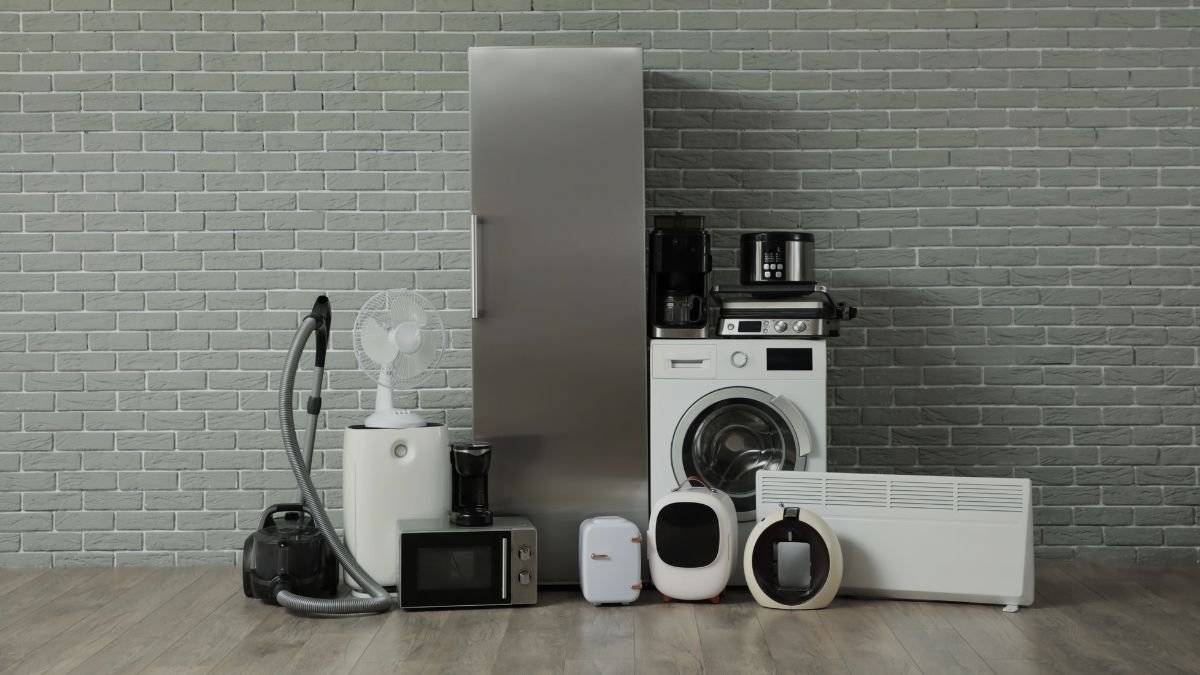

A home appliances marketing strategy in Bangladesh works when it connects three things: trust, convenience, and visible value.
You need a credible online home, a smart paid ads system, and a creative presence that feels local, not imported.
Most appliance buyers in this market do not click and buy in five minutes. They research, compare, ask family, visit a showroom, and then decide. Your marketing has to follow that entire journey, not just the first click.
The Market Is Growing. But It Is Also Crowded.
Bangladesh’s home appliance market is no longer a small urban club. The refrigerator market alone is valued at around Tk 15,000 crore, with 30 to 35 lakh units sold every year. The AC market adds another Tk 6,000 to 7,000 crore, and both categories are growing at roughly 10% annually.
The broader appliance market sits at an estimated Tk 30,000 crore per year. That is serious money. But here is the catch: everyone knows this.
Walton controls more than two-thirds of the refrigerator market. Vision, Singer, Jamuna, Minister, Konka, Samsung, LG, and Hisense are all fighting for the remaining space. If your home appliances marketing strategy looks like everyone else’s, you become background noise.
The Real Buyer Does Not Behave Like an E-commerce Shopper
This is the part many business owners miss. The Bangladeshi appliance buyer is a webroomer. They search online, compare models, read reviews, watch videos, and then walk into a showroom to touch the product and close the deal.
Research on consumer electronics buying in Bangladesh shows that sensory experience, complex buying behavior, and trust in the seller are among the strongest drivers of offline purchase after online research. In plain language: your website and ads do not need to close the sale. They need to earn the showroom visit.
This changes everything about your home appliances marketing strategy. You are not chasing one-click checkouts. You are chasing qualified store visits and phone calls.
Why a Website Is Not Optional Anymore
A Facebook page alone will not carry your brand in 2026. When a customer searches your brand name on Google, they expect to find a real website with product details, warranty information, and a way to contact you.
A website does three quiet jobs that ads cannot do.
First, it gives you search visibility. When someone types “best refrigerator for small family in Bangladesh” or “inverter AC price in Dhaka,” a well-structured website can appear in front of them without you paying for every click.
Second, it builds credibility. A showroom dealer or a cautious buyer will judge your seriousness by your website. A clean, fast, informative site signals that you are a real company, not a Facebook-only operation.
Third, it becomes your content engine. Product guides, comparisons, and buying tips can be shared on social media, sent through Messenger, and used in ads. Without a website, your content has no permanent home.
Meta Ads: The Front Door of Appliance Marketing in Bangladesh
Bangladesh had roughly 82.8 million internet users and 64 million social media user identities by the end of 2025.
Facebook remains the dominant platform, with advertising reach that covers a huge share of the adult population.
For home appliances, Meta Ads work because they match how people actually discover products here.
A customer sees a video of a refrigerator being unboxed, reads the comments, checks the price, and sends a message. That entire sequence happens inside Facebook or Messenger.
The mistake is running one generic ad for everyone. A home appliances marketing strategy that works on Meta separates audiences clearly: first-time buyers, upgrade buyers, festival shoppers, and EMI-focused customers. Each group needs a different message.
A family buying their first fridge cares about price and durability. A household upgrading to an inverter model cares about electricity savings. A festival buyer cares about discounts and EMI. One ad cannot speak to all three.
Google Ads and SEO: Catch the Buyer Who Is Already Searching
Meta Ads create demand. Google captures demand that already exists.
When someone searches “Walton refrigerator price in Bangladesh” or “best AC for home use,” they are not browsing. They are in decision mode. Google Ads put you in front of that person immediately. SEO, done properly, does the same thing over time without paying for every click.
For appliance brands, local SEO matters more than most people realize. Many buyers search with location intent: “appliance showroom near me” or “AC shop in Chattogram.” If your website and Google Business Profile are not optimized for those searches, you are invisible at the exact moment of purchase intent.
Creative Design Is Not Decoration. It Is Persuasion.
In a market where trust is fragile, creative design carries more weight than many business owners admit. A poorly designed ad, a cluttered product image, or a confusing offer graphic makes the brand look unreliable.
Good creative design for appliance marketing does not mean fancy. It means clear. The product is visible. The offer is readable. The EMI amount is obvious. The warranty is stated. The call to action is direct.
Bangladeshi buyers respond to creative that feels familiar. A kitchen that looks like a real Bangladeshi kitchen. A family that looks like a real Bangladeshi family. A price point that matches what people actually earn. Global templates often miss this completely.
Quick Channel Guide for Your Marketing Mix
Here is a simple reference table to keep your home appliances marketing strategy focused. Each channel has a distinct job. Mixing up those jobs is where most budgets get wasted.
| Channel or Asset | Best Used For |
|---|---|
| Website | Product details, warranty info, brand credibility, SEO content |
| Meta Ads (Facebook/Instagram) | New product launches, festival offers, video demos, Messenger leads |
| Google Ads | High-intent searches like “price,” “near me,” “best AC” |
| SEO | Buying guides, comparisons, local showroom pages |
| Creative Design | Ad visuals, product images, EMI breakdowns, festival graphics |
Use this table as a checklist. If one channel is missing or doing the wrong job, your whole home appliances marketing strategy develops a weak spot.
EMI and Festival Timing: The Two Levers Nobody Should Ignore
Appliance purchases in Bangladesh are heavily influenced by EMI financing. Banks and brands routinely offer zero percent EMI for 12 to 36 months on appliances, and this is a major purchase driver.
If your home appliances marketing strategy does not make EMI visible and easy to understand, you are losing buyers who would happily commit to a monthly payment but cannot pay the full amount upfront.
Festivals are the other lever. Eid, summer, and winter create predictable demand spikes for refrigerators and ACs. The brands that win are the ones that plan creative and ad spend around these windows instead of scrambling last minute.
Where Growth Battle Fits in This Picture
This is exactly the kind of layered home appliances marketing strategy that Growth Battle builds for Bangladeshi brands. The team works across Meta Ads, Google Ads, SEO, creative design, and conversion-focused websites as one connected system, not as disconnected services.
If you are running an appliance business and you are not sure whether your website is helping or hurting, whether your Meta ads are reaching the right buyers, or whether your creative is doing the persuasion work it should, a free growth diagnosis is a practical place to start.
Growth Battle reviews your ads, funnel, offer, and market signal, then tells you the one thing to fix first.
No pitch deck. No pressure. Just a clear look at what is blocking your growth.
The Bottom Line
A home appliances marketing strategy in Bangladesh succeeds when it respects how people actually buy. They research online, compare carefully, seek trust, and close offline. Your website earns trust. Meta Ads create attention. Google captures intent. Creative design persuades. EMI removes the price barrier.
Get those pieces working together, and your marketing stops feeling like random spending. It starts acting like a system that produces predictable showroom visits and sales.
Frequently Asked Questions
For reach and engagement, Meta (Facebook) ads are currently the strongest. But they work best when paired with a website and Google search visibility. Relying on one channel alone leaves money on the table.
Yes. A Facebook page is a rented space. A website is an owned asset. It supports SEO, builds credibility, and gives buyers a place to verify your brand before visiting a showroom.
EMI is a purchase enabler. Making it visible in ads, on product pages, and in creative design reduces the perceived financial risk and widens your buyer pool significantly.
Clear, local, and specific. Show the product in a recognisable Bangladeshi setting. State the offer and EMI plainly. Avoid clutter. Familiarity beats flashiness.
